
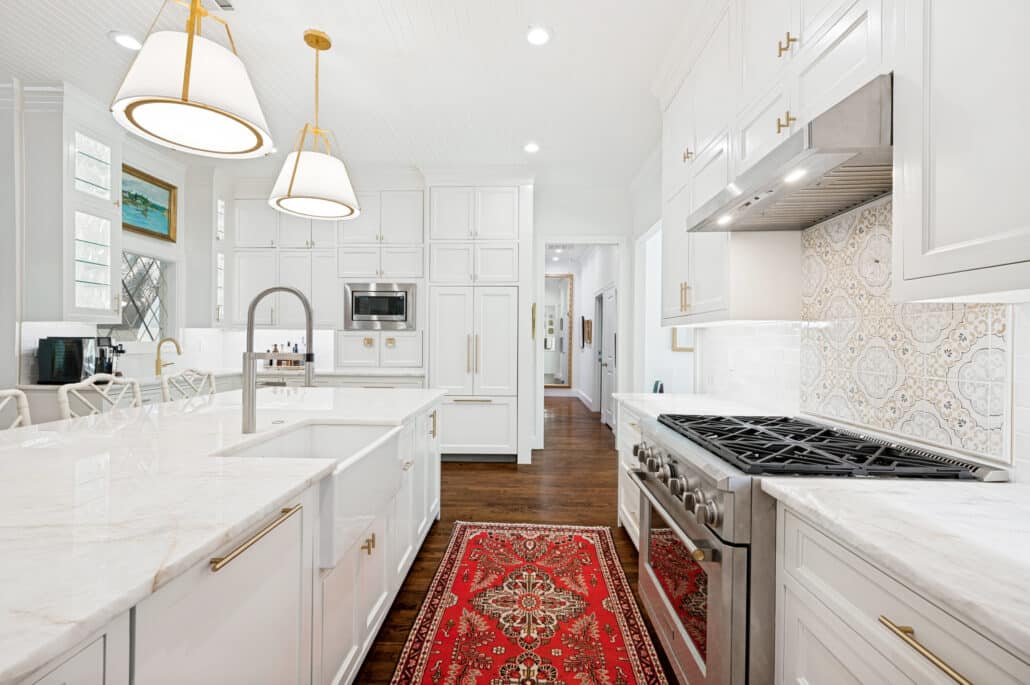
You’ve probably spent plenty of time imagining what your home could become. Maybe your kitchen no longer works for the way your family lives, your primary bathroom needs a complete redesign, or you’re ready to make several rooms feel more connected and functional.
Finding inspiration is the enjoyable part. Choosing the company you’ll trust to bring it all together can feel more complicated.
Most homeowners aren’t remodeling experts, and they shouldn’t have to be. You may have a clear vision for your home without knowing how to compare construction estimates, evaluate design services, or determine who will manage the work.
Choosing the right remodeling contractor means looking beyond beautiful photographs and the price on an estimate. Look for relevant experience, thoughtful design capabilities, a clear process, transparent pricing, and someone accountable for bringing everything together.
At DFW Improved, we’ve spent more than two decades helping Dallas–Fort Worth homeowners navigate these decisions. Here are seven things to consider before hiring a remodeling contractor.
Look Beyond Beautiful Photos, Ask About Experience
A beautiful portfolio is a great starting point, but photographs only tell part of the story.
What you don’t see in the finished kitchen is the wall that had to be reconfigured, the plumbing that needed to be relocated, or the planning required to make a new layout work within the home’s existing footprint.
Remodeling an existing home requires experience with its unique conditions and limitations. A contractor who understands those challenges can help you evaluate what’s possible before committing to a design.
Questions to ask:
- Have you completed renovations similar to mine in size and complexity?
- Can you show me how you’ve improved the functionality of other homes?
- What unexpected challenges have you encountered, and how did you address them?
- Can I speak with homeowners who completed a similar project?
Experience That Helps You See What’s Possible
DFW Improved has completed more than 15,000 remodeling projects across North Texas, including kitchen and bathroom renovations, room additions, and whole-home transformations.
That experience helps our team recognize opportunities homeowners may not have considered, evaluate construction challenges, and recommend solutions that balance design, function, and investment.
Sometimes the best solution isn’t the one you originally imagined. The right remodeling partner should help you understand your options and make decisions that serve your home for years to come.

2. Choose a Contractor Who Helps You Plan, Not Just Build
Most homeowners begin planning a remodel with inspiration photographs and a list of things they’d like to change. That’s a great starting point, but there’s a difference between having a vision and developing a plan that can actually be built.
A kitchen island may look beautiful but leave too little room to move comfortably. Removing a wall may create the open layout you want but require structural modifications. Custom cabinetry may solve a storage problem while affecting appliance placement and countertop specifications.
These decisions influence one another, which is why design expertise matters before construction begins.
Why DFW Improved’s Design-Build Approach Matters
Some contractors expect homeowners to provide completed architectural plans. Others work with independent designers or offer limited assistance with material selections.
At DFW Improved, our in-house architectural and design team works alongside construction professionals to develop plans that consider how your home looks, functions, and comes together.
Our capabilities include custom cabinet manufacturing, countertop fabrication, and an on-staff master plumber. Having direct access to these resources helps our team coordinate design details with construction requirements.
Our Design Center also gives homeowners an opportunity to see materials, compare finishes, and work through selections with professional guidance rather than making every decision from photographs or isolated samples.
Before choosing a contractor, ask who will develop your plans, guide your selections, and confirm that the design works with your home’s construction requirements.
Learn more about DFW Improved’s design and remodeling process.
3. Make Sure You Understand the Process Before You Commit
One of the biggest sources of uncertainty for homeowners is not knowing what happens next.
How long will planning take? When will you know what the project will cost? What decisions need to be made before construction? How will the work affect your household?
A remodeling contractor should explain the process clearly, including what happens before you sign an agreement and how the project moves into construction.
What Should Happen Before You Sign a Remodeling Contract?
Before committing to a major renovation, you should understand how your contractor will evaluate your home, develop a realistic plan, and establish a budget.
At DFW Improved, those conversations begin during the in-home consultation and continue through space planning and the budgetary proposal. We want homeowners to understand what’s possible, which decisions they’ll need to make, and how their investment aligns with their goals.
What Does the DFW Improved Remodeling Process Include?
Our design-build process follows eight primary stages:
- In-home consultation: We visit your home to understand your goals and evaluate the space.
- Space planning: Our team explores layout options and construction considerations.
- Budgetary proposal: We establish conceptual pricing based on the initial scope.
- Fixed-price agreement: We define an agreed scope and pricing framework.
- Design selections and approval: Our designers coordinate plans, materials, and finishes.
- Preconstruction meeting: Your sales consultant and project manager review the approved details and construction plan.
- Building permits: Our team coordinates necessary permits and approvals.
- Construction and completion: Your project manager oversees construction through the final stages.
A defined process helps you understand when decisions will be made, how the project will progress, and what to expect along the way.
4. Find Out Who Will Be Responsible for Your Project
A significant renovation may involve designers, electricians, plumbers, cabinet installers, countertop fabricators, flooring specialists, painters, and other trades.
Each has an important role, but their work must be coordinated.
A change in cabinetry dimensions may affect appliance installation. A delayed material delivery may influence the schedule. An unexpected condition discovered during demolition may require several professionals to adjust their plans.
When those situations arise, someone needs to take responsibility for the solution.
One Project Manager. One Team Responsible for Coordination.
At DFW Improved, every remodeling project has a dedicated project manager who oversees construction, coordinates trades, and manages progress.
Homeowners aren’t expected to become the intermediary between their designer, electrician, cabinet installer, and other specialists.
Many excellent remodeling companies use subcontractors. What matters is whether the contractor has an established system for coordinating their work and maintaining accountability.
Before hiring a company, ask who will manage your project, how scheduling decisions are made, and who will address issues when one phase of construction affects another.
You should be involved in the decisions that shape your home without having to manage the people responsible for building it.
5. Understand What You’re Paying For, Not Just What the Estimate Says
Remodeling is a significant investment, and homeowners deserve straightforward conversations about cost.
Two contractors may provide estimates for what appears to be the same renovation, yet those proposals can include different materials, services, and responsibilities.
One may include architectural drawings, design assistance, custom cabinetry, and project management. Another may expect you to arrange some of those services separately.
Before comparing prices, make sure you’re comparing the same scope of work.
What Determines the Cost of a Home Remodel in DFW?
The investment required for a remodel depends on much more than square footage.
Consider two kitchens of approximately the same size. One homeowner may preserve the existing layout while replacing cabinetry, countertops, appliances, and finishes. Another may remove walls, relocate plumbing, and completely redesign the space.
Both are kitchen remodels, but the construction requirements and investment can be very different.
Important cost considerations include:
- Existing conditions and structural modifications.
- Changes to plumbing, electrical, or mechanical systems.
- Cabinetry, countertops, flooring, fixtures, and finishes.
- Custom materials and specialty features.
- Permits, inspections, and construction requirements.
Understanding these factors early helps you make informed decisions about where to invest and where to adjust the scope.
What Should You Expect From a Remodeling Estimate?
A useful estimate should explain what’s included, which materials or allowances have been assumed, and what could affect the final investment.
Ask each contractor about exclusions, payment schedules, and how they’ll document and approve changes.
At DFW Improved, our budgetary proposal establishes an initial investment expectation. As the project scope is defined, we work toward a fixed-price agreement that provides a clearer framework for the work ahead.
Unexpected existing conditions or homeowner-requested changes may still affect the project. Understanding how those situations will be handled is an important part of evaluating any contractor.
Cost transparency isn’t simply receiving a number. It’s understanding what you’re getting for your investment and which decisions could change it.

6. Pay Attention to How the Company Communicates
Even a well-planned remodel will temporarily change the way you live in your home.
Your kitchen may be unavailable for a period of time, construction crews may be arriving each morning, and certain spaces may be off-limits while work is underway.
What makes those disruptions easier to navigate is knowing what to expect.
Before hiring a contractor, ask how you’ll receive construction updates, how schedule changes will be communicated, and whom you should contact when questions arise.
Communication That Considers Your Household
At DFW Improved, we encourage homeowners to discuss their daily routines, upcoming family events, and practical concerns before construction begins.
Will you be living in the home during the remodel? Will you need temporary arrangements for meals or access to certain rooms? Are there important dates the construction team should know about?
These conversations help us understand how the renovation will affect your household and plan accordingly.
You shouldn’t have to wonder what’s happening in your own home. Clear communication helps you prepare for the work ahead and stay informed as the project progresses.
7. Look for a Reputation Built on More Than Good Reviews
Online reviews can tell you a great deal about a remodeling company, especially when you read beyond the overall rating.
Look for comments about craftsmanship, communication, responsiveness, and how the contractor handled unexpected challenges.
A homeowner who describes feeling informed and supported throughout a complex renovation may tell you more about the experience than a review that simply says the finished kitchen looks beautiful.
What Should You Verify Before Hiring?
DFW Improved reports more than 600 five-star Google reviews, but we encourage homeowners to look beyond review counts when evaluating any remodeling company.
Review completed projects similar to yours. Ask for references and find out how the contractor addresses concerns after construction is complete.
You should also confirm appropriate insurance, permits, trade credentials, and warranty coverage. Licensing requirements vary by trade and municipality in Texas, so ask which qualifications apply to your project.
A reputable contractor should welcome these questions and explain what you can expect before, during, and after the remodel.
How to Compare Remodeling Contractors Side by Side
Once you’ve met with several companies, use the same criteria to evaluate each one.
What Matters
Relevant experience
Design expertise
Planning process
Project management
In-house capabilities
Cost transparency
Communication
Reputation and protection
What to Ask
Have you completed projects similar to mine?
Who develops plans and guides selections?
How will we establish the scope, budget, and construction plan?
Who coordinates trades and manages construction?
Which services are performed by your team?
What’s included, and how are changes handled?
How will I receive updates?
Can you provide references, insurance, and warranty details?
What’s Behind the Estimate? Comparing Remodeling Company Capabilities
Remodeling companies may offer similar-looking portfolios while operating with different teams and resources.
Some primarily manage construction and coordinate independent designers and specialty trades. Others, including DFW Improved, bring many of those services together within one organization.
The right company isn’t necessarily the one with the longest list of services. It’s the one with the experience, resources, and accountability to manage your particular project well.
Red Flags to Watch for Before Hiring a Remodeling Contractor
Be cautious if a contractor:
- Provides a detailed price without adequately evaluating your project.
- Cannot explain who will manage construction.
- Is vague about allowances, exclusions, or change orders.
- Pressures you to sign before reviewing the agreement.
- Cannot provide insurance documentation, references, or warranty information.
These concerns are reasons to ask more questions before making a significant commitment.
Frequently Asked Questions About Choosing a Remodeling Contractor
How Many Remodeling Contractors Should I Interview?
Speaking with two or three qualified companies is often a practical starting point. Focus on relevant experience and compare their approaches to design, planning, pricing, and construction management.
Is a Design-Build Remodeling Company Better Than a General Contractor?
It depends on your project. If you already have complete plans and specifications, a general contractor may be appropriate. If you’re exploring layout changes or planning a complex renovation, a design-build company can coordinate design decisions with construction requirements.
What Should Be Included in a Remodeling Contract?
A remodeling contract should define the scope, pricing, payment terms, materials or allowances, responsibilities, change-order procedures, and applicable warranties. Review the agreement carefully before signing.
What Should I Have Ready Before My First Remodeling Consultation?
You don’t need completed plans or every finish selected. Start with what isn’t working in your home, what you’d like to improve, and your general investment expectations. Inspiration photographs and a list of priorities are also helpful.
Ready to Explore What’s Possible for Your Home?
Choosing a remodeling contractor is about finding a team that understands your goals, respects your investment, and has the experience and resources to bring your vision to life.
At DFW Improved, we bring design, planning, and construction together under one coordinated team so you can focus on your home’s possibilities rather than managing renovation details.
Whether you’re considering a kitchen remodel, bathroom renovation, room addition, or whole-home transformation, we’d love to learn what you’re imagining.
Schedule Your Remodeling Consultation and let’s talk about what’s possible for your home.